Kufleitner Chrysler Dodge Jeep Ram

Blog / Ram

Blog

All Ram Jeep Maintenance Winter Driving
Ram 2500 vs. Ram 3500

2026 Ram 2500 vs. Ram 3500: Do You Need the Step Up?

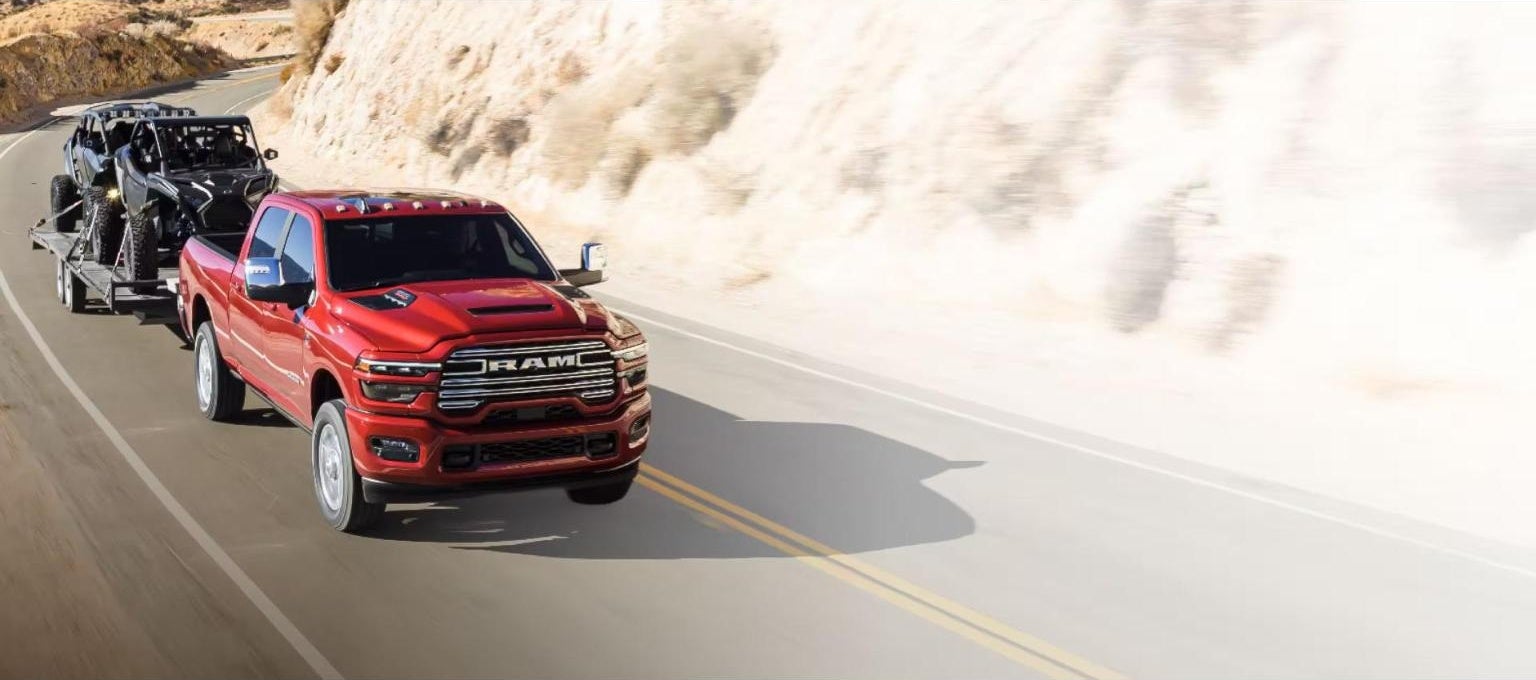
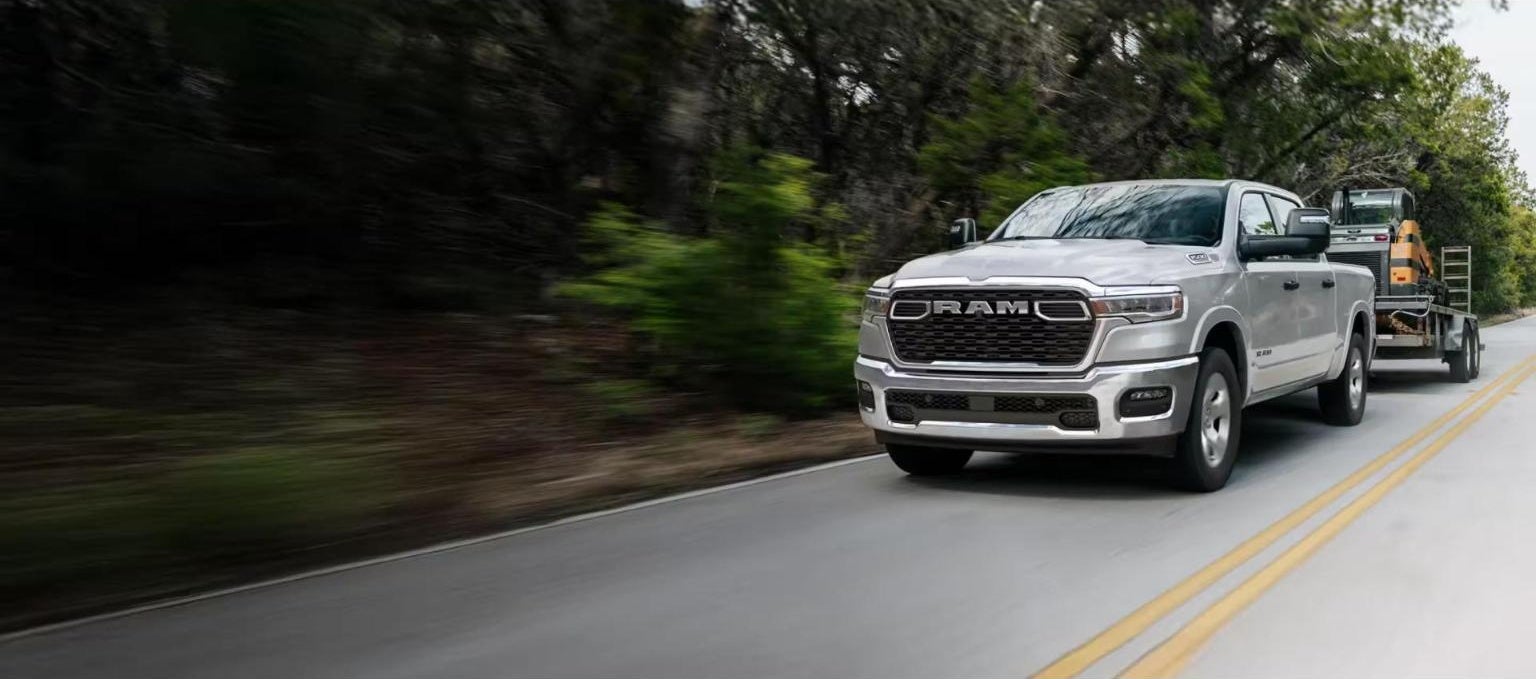
For most heavy-duty shoppers, the 2026 Ram 2500 does the job, and the 2026 Ram 3500 is the step up when your heaviest tow or load calls for it. Both trucks offer the same 430-horsepower Cummins diesel, so the difference shows up in what each truck is rated to pull. Quick Comparison 2026 Ram 2500 2026 Ram 3500 Best for Heavy trailers, work use, daily heavy-duty driving The heaviest tows and the most demanding work Diesel High-Output 6.7L Cummins, available High-Output 6.7L Cummins, available Diesel output 430 hp, 1,075 lb-ft 430 hp, 1,075 lb-ft Top available diesel towing 20,000 lb 36,610 lb Transmission TorqueFlite HD eight-speed automatic TorqueFlite HD eight-speed automatic Trims Tradesman, Rebel, Limited, Power Wagon and more Tradesman, Laramie, Limited and more Ratings are maximums for the best-equipped truck, and your rating depends on how the truck is built. We'll look up the exact numbers on any truck you're considering. The Same Diesel in Both The engine is the same in both. The available High-Output Cummins makes matching horsepower and torque in the 2500 and the 3500. That's good news if you're leaning toward the 2500. You get the same engine character, the same eight-speed automatic and a truck that's a little easier to live with every day. Where the 3500 Pulls Ahead The gap opens up at the hitch. The 3500 is rated to tow up to 36,610 pounds with the available diesel, and you can browse our heavy-duty Ram pickups to see one. That's a big step beyond the 2500. If your heaviest trailer is a large equipment hauler or a big fifth-wheel, or you expect that to be true in a few years, the 3500 gives you the headroom. We like to see a buffer between what you pull and what the truck is rated for, because it makes every trip feel easier. Where the 2500 Fits Better If your heaviest trailer falls within the 2500's rating, you can stop there. For a horse trailer, a travel trailer or a mid-size equipment trailer, the 2500 is a strong fit. The 2500 also gives you the Power Wagon trim for off-road work, plus a Rebel and a Limited, so the lineup stretches from the job site to the long highway tow. If the truck will earn its keep for your business, our commercial vehicles team and the Business Link program can help. Trims at a Glance The 3500 trim list includes the Tradesman, Laramie and Limited. The Tradesman is the work-ready starting point, and the Limited sits at the top. On the 2500 side, the Tradesman, Rebel, Limited and Power Wagon give you more variety if you want a truck for the trail as well as the trailer. Heavy-Duty Ram Questions Do the Ram 2500 and Ram 3500 share the same diesel? They do, and the shared engine is the available High-Output Cummins Turbo Diesel. It's rated at 430 horsepower with 1,075 lb-ft of torque, and both trucks use a TorqueFlite HD eight-speed automatic. What changes between them is the towing rating, and your trailer will tell you which one you need. How much can a Ram 3500 tow? The 2026 Ram 3500 tows up to 36,610 pounds with the available high-output diesel. That's the maximum for a truck equipped to reach it, so the number on the truck you buy depends on its configuration. We can check the rating on any truck in stock. Which trims does the Ram 3500 come in? The Ram 3500 trim list includes Tradesman, Laramie and Limited. If you want a Rebel or a Power Wagon, look at the Ram 2500, where those trims live. Is a Ram 2500 enough for a fifth-wheel camper? It depends on the camper's loaded weight and the truck's configuration. The 2500 tows up to 20,000 pounds with the available diesel, which suits many fifth-wheels. Add up your camper's real weight, and we'll compare it to the rating on the truck you like. Which heavy-duty Ram suits a small business that tows equipment trailers? Start with the 2500 and size up to the 3500 only if your heaviest trailer asks for it. Many small businesses are well served by the 2500's 20,000-pound ceiling. Tell us what you pull, and we'll point you to the right truck. Compare Them in Boardman The best way to settle it is to see the trucks together, whether you're coming from Boardman, Youngstown or along US 224. Take a look at everything in our new Ram trucks and schedule a test drive in Boardman. Our team can also talk through financing options with you. Bring your trailer's weight, and we'll check it against both ratings.

Ram Chassis Cab vs Pickup

Ram Chassis Cab vs. Pickup: Which Work Truck Do You Need?

The body decides which truck you need: if your work calls for a custom body like a flatbed or a dump body, a Ram Chassis Cab is the place to begin, and if a standard bed and a trailer hitch cover the job, a Ram pickup does it. What a Chassis Cab Is A Chassis Cab is a truck with a cab and a frame, and an open back for the body your business needs. The 2026 Ram Chassis Cab starts at the 3500 and runs up through the 5500. Your upfitter builds the body you need behind the cab, such as a flatbed or a dump body. Ram supports that process with an upfit guide and a Body Builder's Guide, and our upfit partners put them to work, so the people building your body have the information they need. Where a Pickup Is Enough A pickup, like the ones in our Ram pickup inventory, makes sense when an open bed and a hitch cover your work, and it handles daily driving too. A Ram pickup carries gear in the bed and pulls a trailer, and it drives like a truck you can use every day. If you tow equipment to the job and carry your tools in a bed cover, a pickup keeps things simple. Power and Upfit Support Chassis Cabs offer the available Cummins Turbo Diesel and a PTO-capable HEMI V8 gas engine. A power take-off, or PTO, lets the engine run body equipment such as a hydraulic lift or dump hoist. Ram's enhanced PTO can be reached from the left and right sides. With the Cummins it offers two speeds with a split-shaft mode, and an available onboard power system can run your tools on the job. For the biggest work, the 5500 carries up to 12,260 pounds of payload with the gas engine. It tows up to 34,540 pounds with the diesel. Those are maximums, and they depend on how the truck's built. Choosing for Your Business Ask what body the job needs and how much weight it will carry. Then think about how often the truck works with a power take-off. Should the answers be a flatbed and plenty of weight, with hydraulics on top, you're in Chassis Cab territory. When the answers are tools and a trailer, a pickup is a smart choice, and when they point to a Chassis Cab, see our Chassis Cab inventory. Describe the work to us, and we'll help you decide. Chassis Cab and Pickup Questions What does PTO do on a Chassis Cab? PTO, or power take-off, sends engine power to equipment mounted on the truck, like a hydraulic lift or dump hoist. Ram's enhanced PTO is reachable from both sides of the truck, and with the Cummins diesel it offers two speeds with a split-shaft mode that works even while parked. Which models does the Ram Chassis Cab come in? The 2026 Ram Chassis Cab comes in 3500 and 4500 models. A 5500 tops the lineup, and the bigger the number, the heavier the work it's built for. We'll help you match a model to the body and the weight it needs to carry. Which engines are available on the Chassis Cab? You can choose the available Cummins Turbo Diesel or a PTO-capable HEMI V8 gas engine, which makes up to 375 horsepower. Both work with a TorqueFlite HD eight-speed automatic. Tell us what body you're building and how it runs, and we'll recommend the engine that fits. Who installs the body on a Chassis Cab? An upfitter builds the body, and Ram offers an upfit guide and a Body Builder's Guide for them. We work with upfit partners, so we can help you line up the body that suits your business. Does the Chassis Cab come as a crew cab? Yes, a Crew Cab is available, and the Big Horn and Laramie trim groups are part of the lineup. If your crew rides together, tell us how many people you carry, and we'll show you the right cab and trim. Let's Match the Truck to the Work Come see a Chassis Cab and a pickup in Boardman, where we serve Youngstown-area businesses. Our Business Link program and financing options can help from there. You focus on the job, and we'll focus on getting the right truck under it.

Ram ProMaster Cargo Van Sizes Explained

Ram ProMaster Cargo Van Sizes Explained

Every van looks big until the shelving goes in and the ladder comes aboard. That's why the ProMaster comes in so many sizes, and why picking the right one starts with how you work. The 2026 Ram ProMaster offers three roof heights and four cargo length options. The biggest setup holds up to 524 cubic feet of cargo and 13 feet of length, so you can size the van to the work. Pick the roof first, then choose the length that fits your longest load. The Short Answer on Size Start with how you work. Standing room and long loads drive most choices. Roof height settles whether you can stand and work inside. Wheelbase and cargo length decide how much fits behind the seats. Ram builds the ProMaster as a Cargo Van, a Window Van or a Cutaway Van, so one platform covers crews and deliveries as well as custom bodies. Three Roof Heights The ProMaster comes with a low roof and two taller options: the high roof and the super high roof. The low roof is easier on parking, while the taller roofs give you room to walk upright and mount taller shelving. If you spend your day working inside the van, take the taller roofs seriously, and browse our ProMaster cargo van inventory to see them. If you pull into tight lots all day, the low roof makes life simpler. Three Wheelbases Wheelbases run from 118 inches up to 159 inches, and the biggest model adds an extended body. A longer wheelbase means more cargo length behind the driver, which helps with ladders and long pipe. A shorter wheelbase turns tighter in a crowded city lot. Think about where you drive most, and we'll help you weigh cargo length against handling in the places you work every day. Matching Size to the Job Picture three kinds of work. A courier running parcels through Boardman, along US 224 and into Youngstown wants easy parking and quick loading on a route full of tight stops and low-clearance garages, so a low roof and a shorter wheelbase make sense. An electrician carrying conduit and a stocked parts bin wants length and shelving room, which points toward a longer wheelbase with a high roof. A plumbing crew that works from the van wants the tallest roof so they can stand and organize. The Crew Van package adds seating for your team. If you're planning a custom body, the Cutaway Van gives your upfitter a clean platform to build on. Ask about our van upfits too. Power Under the Hood The gas ProMaster uses a Pentastar V6 that makes 276 horsepower, and it sends power to the front wheels. You can tow up to 6,910 pounds when it's properly equipped, so a small trailer can ride along with your cargo, which is handy when the job needs a few extra tools parked outside. Our commercial vehicles team can walk you through it. ProMaster Size Questions How many roof heights does the ProMaster come in? The 2026 ProMaster comes in a low roof, a high roof and a super high roof. Your choice sets how much standing room you have inside and how tall your shelving can go. Tell us how you work, and we'll recommend one. Which wheelbases does the ProMaster offer? Ram builds the ProMaster in three wheelbase lengths, from 118 inches up to 159 inches, and the biggest model also comes in an extended body. Longer wheelbases give you more cargo length for ladders and long materials, while shorter ones turn more easily in tight spaces. How much cargo space does the biggest ProMaster hold? The largest ProMaster configuration offers up to 524 cubic feet of cargo space, with a maximum cargo length of 13 feet. Four cargo length options are available, so you can pick the size that matches your load. What is the Crew Van package? The Crew Van package adds seating for your team. If your crew rides along every day, tell us how many people and what gear they carry, and we'll show you how that layout works in person. What engine powers the ProMaster? The gas ProMaster uses a Pentastar V6 that makes 276 horsepower and sends power to the front wheels. That's the engine behind every size we've talked about, so you can focus your decision on roof and length. See a ProMaster in Person Walk through the sizes with us, and bring a tape measure. We can talk through financing options and the Business Link program, or you can contact our team to set up a visit. Tell us what the van has to do, and we'll help keep your business moving.

2026 Ram 1500 vs. Ram 2500

2026 Ram 1500 vs. Ram 2500: Which Truck Fits Your Week?

The 2026 Ram 1500 is the right truck for most households that drive every day and tow now and then. The 2026 Ram 2500 is the better pick when a heavy trailer or a big load sets the standard for your week. Quick Comparison 2026 Ram 1500 2026 Ram 2500 Heavy Duty Best for Daily driving, family trips, light to moderate towing Heavy trailers, work use, big loads Engines 3.0L Hurricane, 5.7L HEMI V8, 3.6L Pentastar V6 High-Output 6.7L Cummins Turbo Diesel I6 available, 6.4L HEMI V8 Top available towing 11,610 lb 20,000 lb with the available diesel Trims Tradesman, Express, Big Horn, Laramie, Rebel, Tungsten and more Tradesman, Rebel, Limited, Power Wagon and more Towing figures are maximums, and the exact rating depends on how a truck is equipped, so we'll check the rating on the exact truck you pick. Engines and Power The Ram 1500 gives you a choice of the Hurricane, the HEMI V8 and the Pentastar V6. The high-output Hurricane makes up to 540 horsepower, which is plenty for a truck that also hauls the kids to practice. Built around the available High-Output Cummins Turbo Diesel, the Ram 2500 makes 430 horsepower and 1,075 lb-ft of torque, the kind of pull you feel the moment a heavy trailer comes up to speed. The Cummins pairs with a TorqueFlite HD eight-speed automatic, and a HEMI V8 is also part of the lineup. Towing and Hauling Start with your heaviest trailer, because that's the one that decides things. The Ram 1500 tows up to 11,610 pounds at the top of its range, which covers many boats and campers, and that's where most shoppers land. Its payload tops out at 2,360 pounds. If the truck will work for a living, our commercial vehicles team can help. Step up to the 2500 when the load gets serious. With the available diesel it reaches 20,000 pounds, a big jump that leaves you room to spare with a heavy fifth-wheel or a loaded equipment hauler. Daily Driving in Boardman Most of your miles around Boardman and Youngstown are errands and commutes, and the 1500 is made for that. It's easier to park, easier to fit in a garage and easier to maneuver in tight spots. If you want a big, capable truck every day and you have the space for it, the 2500 brings real presence to the daily routine. Trims to Shop The 1500 trim list includes Tradesman, Express, Big Horn, Laramie, Rebel and Tungsten, among others, so you can go from a simple work-ready truck to a well-appointed daily driver. Over on the 2500 side, trims include the Tradesman, Rebel, Limited and Power Wagon, among others. For the job site, the Tradesman fits, and the Power Wagon is the one to look at for off-road work. Which Ram Fits Your Week Pick the 1500 if the truck doubles as your family vehicle, you tow a few times a season or you want a relaxed daily driver. Pick the 2500 if you tow every week, haul heavy loads or run a business out of the truck. Not sure which side of the line you're on? Tell us what you pull and what you carry, and we'll match it to a truck. You can also look at new Ram inventory to see both trucks in person, or check the work-truck pickups if the truck's going to earn its keep. Ram 1500 and Ram 2500 Questions Is the Ram 2500 too big for daily driving? Plenty of drivers use a 2500 every day and love it, though it asks for more room when you park and turn. If you've got a roomy garage and open lots near home, it works well. If you park in tight spots, the 1500 is easier. Which engines come in the Ram 1500 and the Ram 2500? The Ram 1500 offers a Hurricane, a HEMI V8 and a Pentastar V6. The Ram 2500 offers the available High-Output Cummins Turbo Diesel and a HEMI V8, and both pair with an eight-speed automatic. Can a Ram 1500 handle a work trailer? It can, within its rating. The 1500 tows up to 11,610 pounds when it's equipped for it, which covers many equipment and lawn-care trailers. Add up your loaded trailer weight first, and if it lands near the top of that range, the 2500 gives you more room. What does the Ram 2500 add over the 1500? The 2500 adds the Cummins diesel, and with that engine it tows up to 20,000 pounds. It also offers the Power Wagon trim, built for off-road work, along with several other trims, so you can choose a truck for the job site or the trail. Which trims does each truck come in? Ram 1500 trims include Tradesman, Express, Big Horn, Laramie, Rebel and Tungsten. Ram 2500 trims include Tradesman, Rebel, Limited and Power Wagon. Ask us which trims are in stock and how each one's equipped. See Both Trucks in Boardman Come see the two trucks side by side, sit in each one and ask us anything you like. You can schedule a test drive, see what your current ride is worth with our trade appraisal tool and talk through financing options with our team in Boardman. We'll take it from there.

Ram Towing Capacity vs. Payload Explained

Ram Towing Capacity vs. Payload Explained

You've got two numbers on a spec sheet and one truck to pick, so which one matters more? Payload is the number many people forget, because everything inside and on the truck comes out of it before the trailer ever hooks up. Towing capacity is how much a Ram can pull, trailer weight included. Payload is how much it can carry, passengers and cargo included. Both depend on how the truck is configured, so the right choice comes from reading the two together. What Payload Covers Payload is the weight your truck can carry. It includes the people in the cab and the gear in the bed, along with any toolbox or hitch you add. It leaves out the truck's own weight. If you've ever loaded the bed with mulch and had three passengers on board, you've used payload before you ever think about a trailer. What Towing Capacity Includes Towing capacity counts the weight of the trailer itself, loaded. The figure comes from taking the truck's curb weight and payload away from the gross combined weight rating. That means every pound you add to the truck can take a pound away from what it can tow. Four adults and a cooler change the math more than most people expect. GVWR and GCWR in Plain Words GVWR, the gross vehicle weight rating, is the most the truck itself should weigh when loaded, without a trailer, and GCWR, the gross combined weight rating, is the most the truck and a loaded trailer should weigh together, with the manufacturer setting both. If you remember one thing, make it this: GCWR is the ceiling for the whole rig, and the truck and trailer share it. Tongue Weight Ties Them Together Tongue weight is the weight a loaded trailer puts on the hitch. It runs roughly 10% of the load for a conventional trailer and about 15% for a fifth-wheel or gooseneck. Here's where the two numbers meet. Tongue weight lands on the truck, so it counts against payload. Too little can make a trailer sway, and too much can change how the truck handles. Putting It Together on a Ram Take the Ram 1500, which offers up to 2,360 pounds of payload and tows up to 11,610 pounds at the top of its range. Picture it carrying two coworkers and a toolbox to a job site in Canfield while pulling an equipment trailer: the people and the toolbox come out of payload, and so does the tongue weight. Those are maximums for specific builds, and the truck in your driveway may carry different numbers. A truck with a bed topper, a toolbox or an upfit has less payload left, and our commercial vehicles team knows those numbers well. An upfit's weight comes off the total payload, and that also changes the tongue weight the truck can take and the trailer it can tow. Bring your trailer's weight and your usual load of people and gear, and we'll check them against the ratings on any Ram in our new Ram inventory. If you need more, our Ram towing guide shows the trucks and technology built for bigger loads. Towing and Payload Questions What is GVWR? GVWR stands for gross vehicle weight rating. It's the maximum weight of the truck itself when it's fully loaded, counting the truck, passengers, cargo and any upfit, but not a trailer. The manufacturer sets it, and it caps how much you can load into the truck. What is GCWR? GCWR stands for gross combined weight rating. It's the most the truck and a loaded trailer should weigh together, as set by the manufacturer. Towing capacity comes from this number after the truck's curb weight and payload are taken out, so a heavier truck load leaves less for the trailer. What is tongue weight? Tongue weight is the downward force a loaded trailer puts on the hitch. For a conventional trailer, plan on roughly 10% of the trailer's load, and for a fifth-wheel or gooseneck, about 15%. Too little weight can lead to sway, and all of it counts against payload. Do passengers and gear reduce how much I can tow? Passengers and cargo use up payload, and because towing capacity is figured from GCWR after payload comes out, a fuller truck can tow less. Load the truck the way you'll really use it before you decide on a trailer. Does a toolbox or upfit count against payload? An upfit or accessory adds weight, and its weight gets subtracted from the total payload to see how much is left for people and gear, and for tongue weight. Bring your plans in, and we'll help you run the numbers for the truck you like. Let's Check Your Numbers Stop in from Boardman, Youngstown or anywhere along US 224, and we'll go through the ratings together. You can also schedule a test drive. If you have questions beforehand, contact our team.

Ram ProMaster vs. Ram Pickup: Which Is Better for Your Business?

Ram ProMaster vs. Ram Pickup: Which Is Better for Your Business?

Choose a Ram ProMaster if your cargo needs a roof over it: tools, parts and materials stay enclosed, and you can move around inside. Choose a Ram pickup if your cargo is long, bulky or messy enough to ride in an open bed. This page compares how each one carries your gear and fits your crew. Quick Comparison Ram ProMaster Ram Pickup Best for Enclosed cargo, mobile workshops, deliveries Trailers, open-bed loads, job-site hauling Cargo Up to 524 cu ft with the right roof and length Open bed Loading Enclosed, loads through the rear and side doors Open bed, loads over the sides and through the tailgate Security Locked cargo area Locking cover or toolbox available Seating Crew Van package available Crew Cab available When the Van Wins If your tools or inventory need to stay out of sight, the ProMaster cargo vans give you an enclosed cargo area. The biggest ProMaster tops out at 524 cubic feet of cargo space and 13 feet of cargo length, and you can choose from three roof heights. Think of it as a rolling shop, and our commercial vehicles team can help you set one up. Electricians and plumbers often set up shelving and work right inside the van, and it's a favorite with delivery businesses, too. When the Pickup Wins If your cargo is long, bulky or messy, a pickup is the answer. Lumber, pipe and sheet goods can stick out past the tailgate, and the heavy-duty Ram 2500 and 3500 step up the capacity for the heaviest materials. A pickup also handles loose materials like mulch and gravel with ease, and the bed is made to take a beating. Many trades keep a pickup and add a locking cover or toolbox for security. Crew and Passengers Carrying a crew changes the choice. Ram pickups offer a Crew Cab, so your team can ride together. The ProMaster offers a Crew Van package. If your team rides together and also needs cargo space, ask us to show you how that layout works. Financing a Work Vehicle Whichever way you go, it helps to know the numbers early. Our commercial financing team can walk you through the options for financing a work vehicle, and if you're enrolled, the Business Link program adds dedicated support. ProMaster and Pickup Questions Which is better for tools that need to stay out of sight? The ProMaster is the better fit, because its cargo area is fully enclosed and keeps tools, parts and materials out of view and out of the weather. A pickup can do the job with a locking cover or toolbox, though a van gives you more room to organize shelving and bins inside. How do I decide how much cargo space I need? List your longest item, your tallest stack and how many shelves or bins you want on board. A ProMaster takes shelving, bins and tall stacks inside, and a pickup bed suits long, bulky or messy loads. Bring the list, and we'll check it against both. Which holds more cargo, a ProMaster or a pickup? For enclosed cargo, the ProMaster is the answer, since it offers up to 524 cubic feet of cargo space, with 13 feet of cargo length at its longest. A pickup carries open loads in its bed, so the better fit depends on whether your cargo needs a roof over it. What drivetrain does the ProMaster use? The ProMaster is front-wheel drive, and it's powered by a Pentastar V6 that makes 276 horsepower. If you need four-wheel drive for rough job sites, take a look at the Ram pickups. Ask us to park both vehicles side by side, and we'll talk through how each one drives and loads. Can I get a ProMaster with a second row of seats? The Crew Van package adds seating for your team. Tell us how many people ride along each day, and we'll point you to the right setup. Find the Right Vehicle for Your Business Come see a ProMaster and a pickup side by side, whether your business is in Boardman, Youngstown or along US 224, and we'll load your gear into each. Browse the Ram pickups or talk with our team in Boardman. Bring your longest tool and your tallest shelf, and we'll test the fit.

Best Ram Vehicle for Contractors

Best Ram Vehicle for Contractors

Every contractor has a biggest day, whether it's the heaviest trailer or the tallest ladder, and the Ram you pick should be built around that day. Do that, and the rest of the week gets easy for contractors in Boardman, Youngstown and across Mahoning County. The best Ram for contractors depends on the work you do. Go with the Ram 1500 for lighter duty and a heavy-duty pickup for serious towing. A ProMaster works as a rolling shop, and a Chassis Cab carries a custom body. Ram 1500 for Lighter Duty A solo contractor who hauls tools and pulls a small trailer is well served by the Ram 1500, and it's the one most people picture first. It tows up to 11,610 pounds at its maximum and offers a payload of up to 2,360 pounds. It's also the Ram that feels most like a regular vehicle, so the drive to the job and the drive home stay comfortable even after a long day on your feet. Ram 2500 and 3500 for Heavy Work If you pull equipment trailers or carry heavy materials, step up to a heavy-duty Ram. The 2500 tows up to 20,000 pounds with the available Cummins diesel. The 3500 reaches 36,610 pounds. Both offer the same diesel, so the real question is how big your heaviest trailer is, and that's an easy one to answer with a scale. Our team can show you both in person. ProMaster for the Rolling Shop Many trades work best out of a van, since the ProMaster keeps tools and materials enclosed and out of the weather. Our ProMaster cargo vans are ready to look over. Chassis Cab for Custom Bodies When the body is the job, like a dump body or a flatbed, start with a Ram Chassis Cab. It's offered from the 3500 up through the 5500, and an upfitter builds the body behind the cab. Ask us what Chassis Cabs are on the lot today. Match the Ram to the Job Ask yourself what you carry, what you pull and who rides along, because a one-person remodeling business and a five-person crew with a trailer need very different trucks. A landscaper or excavation crew pulling equipment around Boardman and Canfield will lean toward a pickup, and an electrician, plumber or HVAC tech making calls across Youngstown may want a van. Write down your biggest load and your heaviest trailer, add the headcount and bring that list in. We'll match a Ram to it, and we can talk through financing options and the Business Link program at the same time. Contractor Questions Which Ram suits a one-person contracting business? A Ram 1500 suits many solo contractors, with a top towing rating of 11,610 pounds and room for tools in the bed. If your work happens inside the vehicle, a ProMaster can be a better shop on wheels. Tell us how you work, and we'll narrow it down. Which Ram fits a crew that carries tools and materials? A ProMaster keeps tools and materials enclosed and offers a Crew Van package for your team. If your crew also pulls a trailer, a crew cab pickup is the better match. Count the people and the gear, and we'll show you the layouts. Which Ram pulls the heaviest trailers? The Ram 3500 leads the lineup for pickups, with a top available high-output diesel towing capacity of 36,610 pounds. The Ram 2500 follows at 20,000 pounds with its available diesel. Ratings depend on how the truck is equipped, so we'll check the one you like. Can I add a dump or flatbed body to a Ram? Yes. A flatbed or dump body goes on a Ram Chassis Cab, and upfitters build it using Ram's upfit and Body Builder's guides. We can connect you with upfit partners and help you plan the build around the truck. How do I get started buying a work vehicle for my contracting business? Start with the vehicle that fits your biggest day, then talk with our finance team about how you'd like to pay. They'll walk you through the options for a contracting business, and you can begin your application on our finance page when you're ready. Tell Us About Your Biggest Day Stop in and tell us what a typical week looks like, and we'll help you choose the Ram that fits. Explore commercial vehicles, browse new Ram inventory or schedule a test drive to get started. We'll help you pick the Ram that fits your crew.

Ram 1500 Service Schedule and Maintenance Checklist

Ram 1500 Service Schedule and Maintenance Checklist

Keeping your Ram 1500 in good shape is easier when you stay ahead of routine maintenance and pay attention to how the truck is actually being used. At Kufleitner Chrysler Dodge Jeep Ram in Boardman, we help Ram 1500 owners from Youngstown, Canfield, Poland, Austintown, and throughout the Mahoning Valley keep up with oil changes, tires, brakes, filters, fluid checks, and other service needs. Your exact maintenance schedule depends on the model year, engine, drivetrain, mileage, and driving conditions, so your owner’s information and vehicle maintenance reminders should always come first. This guide gives you a practical overview of the major items to watch. Follow Your Ram 1500 Oil Change Indicator Current Ram 1500 models use an automatic oil-change indicator that takes operating conditions into account rather than relying on one fixed mileage interval. Things like frequent short trips, trailer towing, extended idling, and very hot or cold temperatures can affect when the Oil Change Required message appears. For the 2026 Ram 1500, an oil-change interval should not exceed 10,000 miles, 12 months, or 350 engine hours, whichever comes first. Once the indicator appears, service should be completed promptly. That makes the truck’s oil-life system a better guide than automatically changing the oil every 5,000 or 7,500 miles. Ram 1500 Maintenance Checklist Some maintenance items are checked frequently, while others become more important as mileage accumulates. Regular Checks It is a good idea to keep an eye on your Ram 1500 between service visits, especially before a long drive or towing trip. Regular checks can include: Engine oil level Tire pressure and condition Exterior and interior lights Battery terminals and connections Brake condition and brake fluid level Steering and suspension components Windshield wipers and washer fluid Coolant level Current Ram guidance recommends checking several of these items monthly or before a long trip. Around 10,000 Miles Current 2026 Ram 1500 guidance calls for tire rotation every 10,000 miles or sooner if there is a meaningful difference in tread depth between the tires. This is also a good time to inspect CV and universal joints and look for uneven tire wear that could point to an alignment or suspension issue. Around 12,000 to 15,000 Miles The cabin air filter should be inspected around 12,000 miles and replaced when necessary. Around 15,000 miles, current maintenance guidance also calls for inspection of front suspension and tie-rod ends, brake linings, and the parking brake. Around 30,000 Miles At approximately 30,000 miles, current Ram 1500 maintenance guidance includes replacing the engine air cleaner filter. This is also a point when front and rear axle surfaces should be inspected for signs of leakage. For trucks used for frequent trailer towing, fleet work, off-road driving, or other demanding use, axle-fluid service may be needed more often. Transfer-case fluid should also receive additional attention on four-wheel-drive trucks used under demanding conditions. Spark Plugs Spark-plug intervals depend on the engine. For current 2026 guidance, the 3.0L engine calls for spark-plug replacement at 60,000 miles, with a second replacement due at 120,000 miles. The 5.7L engine uses a shorter interval, closer to 90,000 to 97,500 miles depending on the source referenced. Because engine availability and maintenance requirements vary by model year, we recommend checking the schedule for your specific Ram 1500 rather than assuming one interval applies to every truck. Coolant and Longer-Term Maintenance Current 2026 guidance calls for engine coolant replacement at 10 years or 150,000 miles, whichever comes first. At higher mileage, your truck may also need additional attention to belts, transfer-case fluid, suspension components, and other wear items depending on its configuration and use. Ram 1500 Brake Maintenance Your brakes do not follow one universal replacement mileage. Their lifespan depends on driving habits, towing, terrain, traffic, and how much weight the truck regularly carries. Watch for signs such as: Squealing or grinding Vibration while braking A soft or unusual brake pedal Pulling to one side Longer stopping distances A brake warning light Brake linings and other brake components should be inspected regularly rather than waiting for a predetermined replacement mileage. Current Ram 1500 maintenance guidance also calls for brake-fluid replacement every 24 months. If your brakes feel or sound different than normal, schedule an inspection rather than waiting for the next routine maintenance visit. Tire Care for Northeast Ohio Driving Tires deal with a lot in Boardman and Youngstown, from winter temperatures and snow to potholes, road salt, summer heat, and construction. Check tire pressure regularly, especially when temperatures change significantly. Cold weather can cause tire pressure to drop, while potholes and curb impacts can contribute to alignment problems or tire damage. You should also watch tread depth and uneven wear. If your Ram 1500 starts pulling, the steering wheel sits off-center, or the tires begin wearing unevenly, an alignment inspection may be worthwhile. For drivers who spend a lot of time on snow-covered or poorly cleared roads, winter tires may also be worth considering. Ram 1500 Maintenance for Towing and Heavy Use A Ram 1500 that regularly tows or works hard may need different maintenance attention than one used mostly for commuting. Frequent trailer towing, dusty or off-road driving, fleet use, extended idling, and repeated short trips can affect oil life and increase wear on components such as: Brakes Tires Axles Transfer case Suspension Cooling system Current Ram maintenance guidance specifically calls for more frequent attention to axle and transfer-case fluids under certain demanding-use conditions. Rather than applying a generic “severe-duty” mileage schedule to every truck, we can help you build a maintenance plan around how you actually use your Ram 1500. Ram 1500 Transmission Maintenance Current Ram automatic transmissions do not necessarily follow the old-style routine of checking fluid with a dipstick at every service. For many modern Ram 1500 transmissions, fluid level is preset and routine level checks are not required under normal operating conditions. Ram also specifically cautions against using chemical transmission flushes because they can damage transmission components. If you notice rough shifting, slipping, delayed engagement, unusual noises, leaks, or another transmission concern, have the truck inspected rather than automatically scheduling a fluid flush based on mileage alone. Schedule Ram 1500 Service in Boardman Our service department at Kufleitner Chrysler Dodge Jeep Ram handles routine maintenance, diagnostics, and repairs for Ram trucks and other CDJR vehicles. We can help with: Oil and filter changes Tire rotations Brake inspections and service Battery testing Filters Fluid inspections Steering and suspension concerns Check-engine-light diagnosis Additional maintenance and repairs Our dealership is located at 7901 Market Street in Boardman and serves drivers throughout Youngstown, Austintown, Canfield, Niles, Warren, and the surrounding Northeast Ohio area. Whether you bought your Ram 1500 from us or somewhere else, you can bring it to our team for service. Frequently Asked Questions About Ram 1500 Maintenance How often does a Ram 1500 need an oil change? Current Ram 1500 models use an automatic oil-change indicator that adjusts based on operating conditions. For the 2026 Ram 1500, oil-change intervals should never exceed 10,000 miles, 12 months, or 350 engine hours, whichever comes first. Follow the oil-life system and the maintenance information for your specific model year. How often should I rotate the tires on a Ram 1500? Current 2026 Ram 1500 guidance calls for tire rotation every 10,000 miles or sooner if the difference in tread depth reaches the specified threshold. Tire wear can vary based on alignment, driving habits, towing, and road conditions. When should I replace the engine air filter? For the 2026 Ram 1500, the current maintenance schedule calls for replacing the engine air cleaner filter at approximately 30,000 miles. Dusty and off-road driving may require more frequent inspection. When should Ram 1500 spark plugs be replaced? The interval depends on the engine. Current 2026 guidance calls for spark-plug replacement at 60,000 and 120,000 miles for the 3.0L engine, and roughly 90,000 to 97,500 miles for the 5.7L engine. Check the schedule for your exact model year and engine before planning service. How often should Ram 1500 brake fluid be changed? Current 2026 Ram 1500 maintenance guidance calls for brake-fluid replacement every 24 months. Brake pads and other brake components should be inspected based on wear rather than replaced at one predetermined mileage. Does towing affect Ram 1500 maintenance? It can. Frequent towing can affect oil life and increase wear on brakes, tires, axles, suspension, and drivetrain components. Current maintenance guidance also calls for additional axle and transfer-case fluid service under certain frequent-towing and heavy-use conditions. Can I bring my Ram 1500 to Kufleitner even if I bought it somewhere else? Yes. Our service department works on Ram vehicles regardless of where they were purchased. You can bring your Ram 1500 to our Boardman service center for routine maintenance, diagnosis, or repair.


Contact Us

Fill out this form below and we'll contact you shortly
*Required Fields