




Kufleitner Chrysler Dodge Jeep Ram

Blog / Jeep

2026 Jeep Wrangler vs. Grand Cherokee: Trail Icon or Family Cruiser?

2026 Jeep Wrangler vs. Jeep Grand Cherokee

Two of Jeep's best-known SUVs answer very different questions. The Wrangler is the open-air original, built for trails, doors-off summer drives and a go-anywhere attitude. The Grand Cherokee is the refined family SUV, built for long highway miles, a quiet cabin and plenty of cargo room. Mahoning Valley drivers weigh them against each other all the time, so here is how they compare on the things that matter day to day.

Feature2026 Wrangler (4-door)2026 Grand Cherokee
Seating5 (4-door); 4 (2-door)5
Cargo31.7 cu ft behind rear seats, 72.4 maximum37.7 cu ft behind rear seats, 70.8 maximum
Engines2.0L turbo (270 hp), 3.6L V6 (285 hp)3.6L V6 (293 hp), available 2.0L turbo (324 hp)
Fuel economy20 city / 22 highway (2.0L)19 city / 26 highway
Towing3,500 lbs (2.0L Sahara); varies by configurationUp to 6,200 lbs
Drivetrain4WD standardRear-wheel drive or available 4x4

Ratings vary by trim and configuration, and our team can confirm the details on any vehicle in stock.

Design and Personality

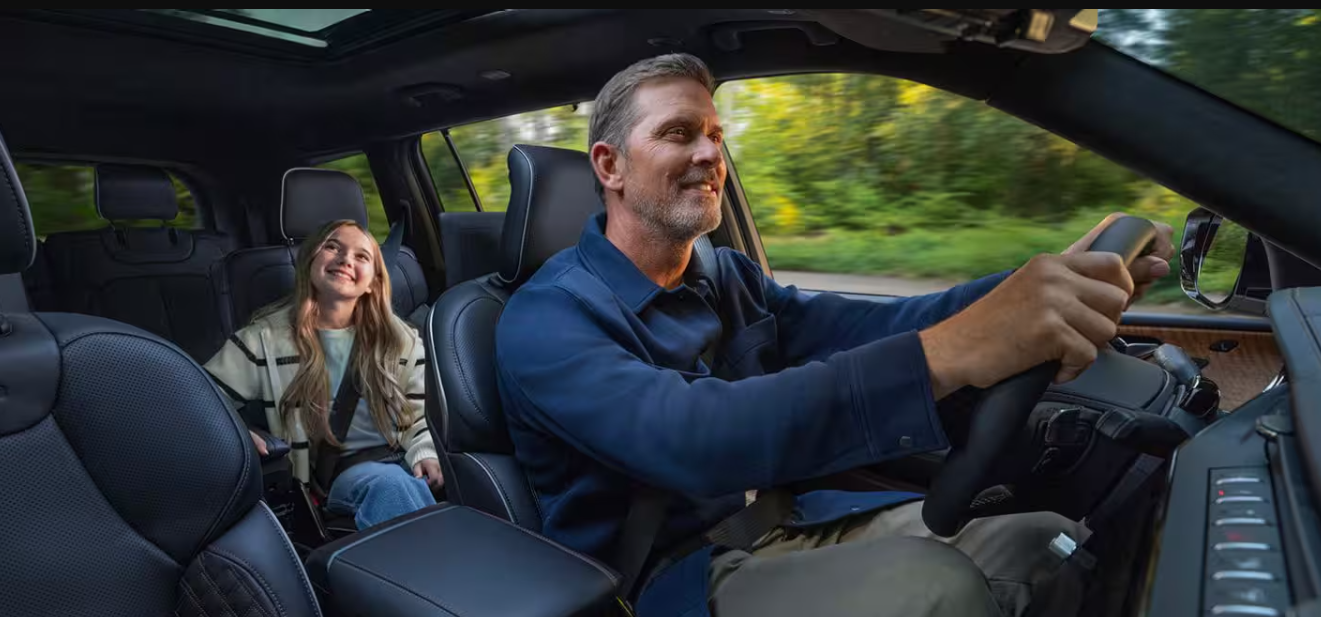
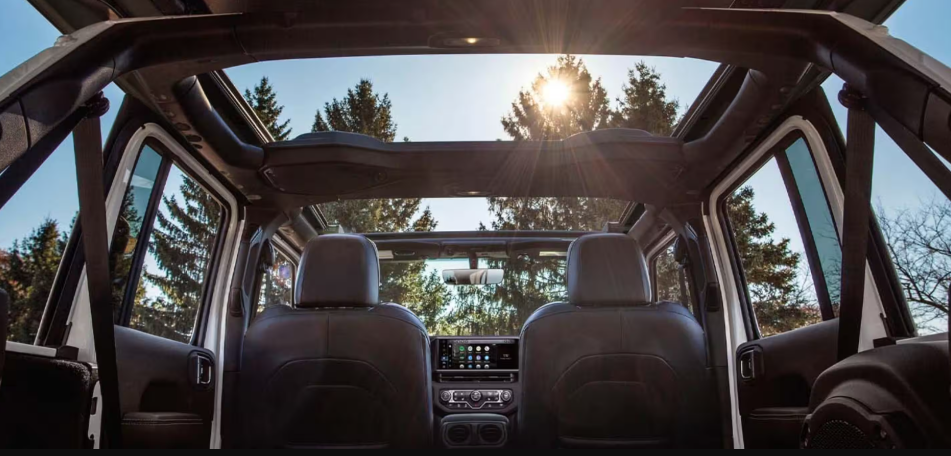
The Wrangler keeps its upright stance, removable top and quick-release doors on the road and the trail, and that character is the reason many owners choose it. The Grand Cherokee takes a smoother approach with an elegant cabin, a standard 12.3-inch touchscreen and available upscale touches such as leather, wood trim and a McIntosh audio system on higher trims. One is built for fun first and comfort second. The other puts comfort first and still delivers real Jeep capability.

Space and Cargo

Both seat five in four-door form, though the Grand Cherokee is longer at 193.5 inches and its cabin feels more spacious on long drives. It also offers more room behind the rear seats, at 37.7 cubic feet compared with the Wrangler's 31.7. Fold the seats and the Wrangler's tall, boxy cargo area stretches to 72.4 cubic feet, a great fit for camping gear and a cooler. The two-door Wrangler seats four and offers 12.9 cubic feet behind the seats.

Towing and Capability

The Grand Cherokee leads on towing with a rating up to 6,200 pounds, enough for a pontoon boat headed to Mosquito Lake or Lake Milton. A Wrangler 2.0L Sahara is rated for 3,500 pounds, which suits a small trailer or a pair of kayaks. Off the pavement the Wrangler shines with standard four-wheel drive, and the Grand Cherokee offers available 4x4 for snowy Ohio mornings and gravel roads on the way to the cabin.

Comfort and Daily Driving

A Wrangler rewards you with an engaging drive and a view of the sky, and its ride feels lively on a Market Street commute. The Grand Cherokee smooths the miles on I-680 and I-80, rates up to 26 mpg on the highway and brings the quiet that long-haul families appreciate. Both come with modern safety and driver-assistance technology, and the Grand Cherokee adds a power liftgate and available surround-view camera.

Which Jeep Fits Which Driver?

  • Trail lovers and weekend adventurers: Wrangler
  • Families and long-distance commuters: Grand Cherokee
  • Drivers who tow a boat or camper: Grand Cherokee
  • Drivers who want a removable top and doors: Wrangler

Shop Both in Boardman

Browse our Wrangler inventory and Grand Cherokee inventory, or explore the full Jeep lineup. If a pickup is on your list, read our Wrangler vs. Gladiator guide, or see how the Grand Cherokee compares with a smaller crossover in our Compass vs. Grand Cherokee guide. Explore financing or contact us to schedule a test drive.

FAQs

Is the Grand Cherokee more comfortable than the Wrangler?

Most drivers find it so. The Grand Cherokee has a smoother ride, a quieter cabin and a longer body, while the Wrangler trades some of that polish for open-air fun and trail character.

Which one is better for towing?

The Grand Cherokee, rated up to 6,200 pounds. Wrangler ratings are lower and depend on the engine and configuration, so our team can confirm the number for the one you choose.

Does the Grand Cherokee have four-wheel drive?

Yes, it is available on the Grand Cherokee, which also comes in rear-wheel drive. The Wrangler includes 4WD as standard on every trim.

Which Jeep has more cargo room?

The Grand Cherokee offers more room behind the rear seats at 37.7 cubic feet. The Wrangler's maximum cargo of 72.4 cubic feet is slightly higher with the seats folded.

Can I trade in my current vehicle?

Yes. Start with our value your trade page, and our team will factor the trade into your numbers on a new Jeep.

Posted in:

Related Posts

New vs. Used Jeep: Which Should You Buy?

New vs. Used Jeep: Which Should You Buy?

Few shopping decisions spark as much debate as new versus used. A new Jeep brings the latest features and a full factory warranty, and a used or certified Jeep stretches your budget and can put a higher trim within reach. Each path fits a different kind of buyer, so this guide lays out how they compare for Mahoning Valley drivers choosing between a showroom model and a pre-owned one. Feature New Jeep Used or certified Jeep Budget Higher purchase price Lower purchase price, often a higher trim for the money Warranty Full factory coverage Remaining factory coverage, plus added certified coverage on CPO models Features Latest technology and options Features vary by model year Selection Choose color, trim and options Choose from what is available Financing New-vehicle offers when available Used-vehicle rates through our lenders Pricing, offers and coverage vary by vehicle, and our team can confirm the details on any Jeep in stock. Budget and Depreciation A new vehicle typically loses the largest share of its value in the first years of ownership, and a used Jeep lets the first owner absorb that change. Mileage, condition and model year all matter, so compare total costs, including insurance and fuel, before you decide. Warranty and Certified Pre-Owned A new Jeep carries full factory coverage, which gives many buyers peace of mind through the early years. Certified pre-owned Jeeps pass a detailed inspection and add extra coverage on top of any remaining factory warranty. Our certified pre-owned page explains the program, and our team can show you the specific coverage on each certified vehicle. Features and Model Choice Buying new means you pick the exact color, trim and options, and you get the latest technology, such as the standard 12.3-inch touchscreen on today's Grand Cherokee. Buying used opens a wider range of model years and trims, including popular Wranglers and Gladiators built in earlier configurations. Tell us your priorities and we will help you weigh them. Financing and Trade-In Both paths offer financing options. New Jeeps may qualify for manufacturer offers, and used vehicles may carry different rates. Run the numbers with our payment calculator, get pre-approved on our financing page and see what your current vehicle is worth with our trade appraisal tool. A strong trade value can lower the cost of either path. Which Route Fits Which Buyer? Buyers who want the latest features and full factory coverage: new Buyers who want to stretch a budget toward a higher trim: used or certified Buyers who want added peace of mind on a pre-owned Jeep: certified pre-owned Buyers who love a specific color or option combination: new Shop New and Used Jeeps in Boardman Browse our new Jeep inventory and used vehicles, and check new specials and used specials for current offers. Questions about which path fits? Contact us and our team will help you weigh the options. FAQs Is a used Jeep a better value than a new one? It can be, depending on the vehicle's age, mileage and condition. Compare the purchase price, coverage and expected costs for the specific Jeeps you are considering. What does certified pre-owned mean? A certified pre-owned Jeep passes a detailed inspection and carries added coverage beyond any remaining factory warranty. Ask our team for the coverage details on any certified vehicle. Can I finance a used Jeep? Yes. Our finance team works with lenders on both new and used vehicles, and you can start on our financing page. Should I trade in my current vehicle? If you have a vehicle to trade, it can lower your cost on either path. Start with our value your trade page to see an estimate.

Jeep 4xe vs. Gas: Which Is Right for You?

Jeep 4xe vs. Gas: Which Is Right for You?

The Jeep 4xe pairs a turbocharged engine with an electric motor and a plug-in battery, so you can drive short trips on electricity and rely on gas for longer ones. Gas Jeeps keep things simple with a single powertrain and an ownership routine that skips charging. One important update for shoppers: Jeep has phased out its plug-in hybrids beginning with the 2026 model year, so the 4xe is a used and certified choice today. This guide compares the two so Mahoning Valley drivers can decide which fits their routine. Feature Wrangler 4xe Grand Cherokee 4xe Gas Wrangler / Grand Cherokee Power 375 hp, 470 lb-ft 375 hp, 470 lb-ft 270 or 285 hp (Wrangler); 293 or 324 hp (Grand Cherokee) Electric range Up to 21 miles Up to 25 miles Gas power Total range Up to 370 miles Up to 470 miles Varies by engine Efficiency 49 MPGe 56 MPGe Wrangler 20/22 mpg (2.0L); Grand Cherokee 19/26 mpg Towing Ask our team Up to 6,000 lbs Grand Cherokee up to 6,200 lbs Ratings are EPA-based estimates and vary by model year and configuration. Our team can confirm the details on any vehicle in stock. Charging and Your Commute The 4xe rewards drivers who can plug in at home. A morning commute from Boardman to downtown Youngstown can fall within the electric range of 21 miles in the Wrangler 4xe or 25 miles in the Grand Cherokee 4xe, and a full battery and tank extend the total range to 370 and 470 miles. Drivers who park on the street still get a capable Jeep, though the electric benefit shrinks. Our EV charging tips explain how Ohio drivers can set up a simple routine. Power and Capability Both 4xe models make 375 horsepower and 470 lb-ft of torque, a quick launch for merging onto I-680, and the Wrangler 4xe delivers quiet electric trail driving. Gas models bring their own strengths: the Wrangler offers a 270-horsepower 2.0L turbo or a 285-horsepower V6, and the Grand Cherokee offers a 293-horsepower V6 or an available 324-horsepower 2.0L turbo. The gas Grand Cherokee tows up to 6,200 pounds, compared with 6,000 pounds for the 4xe. Road Trips and Ownership Routines Gas models fill up in minutes and skip the charging plan, which suits frequent trips to Pittsburgh, Columbus or Lake Erie. The 4xe handles those trips as well, because its gas engine takes over when the battery runs low. Ownership routines differ: 4xe owners benefit from plugging in each night, and gas owners follow the familiar rhythm of a stop at the pump. What to Ask About a 4xe Where will you charge, and how far is your typical day? What is the vehicle's service and recall history? How does the battery coverage apply to a used or certified model? Which gas Jeep would you consider if your routine changes? Shop Jeep in Boardman Browse our used Jeeps and new Jeep inventory, and ask our team what 4xe models are on the lot today. Our certified pre-owned program is another good place to start, and you can compare monthly payments with our payment calculator. For service questions, visit our service center or contact us. FAQs Is the Jeep 4xe still sold new? Jeep has phased out its plug-in hybrids beginning with the 2026 model year. Availability changes, so ask our team what 4xe models are on the lot today. How far does a Jeep 4xe go on electricity? The Wrangler 4xe offers up to 21 miles of electric range, and the Grand Cherokee 4xe offers up to 25 miles. Cold Ohio weather and driving style can change the result. Does the 4xe cost less to run than a gas Jeep? It can, depending on your electric rates, gas prices and how often you charge. We suggest tracking your daily miles and charging access before you decide. Which Jeep is better for towing, 4xe or gas? The gas Grand Cherokee is rated up to 6,200 pounds, and the Grand Cherokee 4xe up to 6,000 pounds. Our team can confirm the rating for the specific vehicle you choose.

2026 Jeep Compass vs. Grand Cherokee

2026 Jeep Compass vs. Grand Cherokee: Which Size Fits Your Life?  

Many Jeep shoppers narrow their search to the same two questions: do I want a compact SUV that slips into tight parking spots, or a midsize SUV with more room, power and presence? The 2026 Jeep Compass and Grand Cherokee answer those questions in different ways. Here is how they compare for Mahoning Valley drivers who commute along Market Street, haul kids to weekend games and head out for trips to Pittsburgh or Lake Erie. Feature 2026 Compass 2026 Grand Cherokee Seating 5 5 Length About 173.4 in About 193.5 in Cargo 27.2 cu ft behind rear seats, 59.8 maximum 37.7 cu ft behind rear seats, 70.8 maximum Engines 2.0L turbo (200 hp), standard AWD 3.6L V6 (293 hp), available 2.0L turbo (324 hp) Fuel economy 23 city / 31 highway 19 city / 26 highway Towing Up to 2,000 lbs Up to 6,200 lbs Ratings vary by trim and configuration, and our team can confirm the details on any vehicle in stock. Size and Cargo The Grand Cherokee is about 20 inches longer than the Compass, and you notice it the moment you step inside. Both seat five. The Compass offers 27.2 cubic feet behind the rear seats, plenty for weekly groceries, a stroller and gym bags, and 59.8 cubic feet with the seats folded. The Grand Cherokee raises those figures to 37.7 and 70.8 cubic feet, which swallows luggage for a family road trip or a load from the home improvement store. Power and Efficiency The Compass pairs a 2.0L turbo with standard all-wheel drive and an eight-speed automatic. It makes 200 horsepower and rates 23 mpg in the city and 31 mpg on the highway, which suits long commutes on I-680 and I-80. The Grand Cherokee brings extra muscle with a 293-horsepower 3.6L V6, and a new 324-horsepower 2.0L turbo is available for 2026. It rates 19 mpg city and 26 mpg highway, a fair trade for the added power, space and towing ability. Capability and Towing The Grand Cherokee tows up to 6,200 pounds, enough for a pontoon boat or a camper, and available 4x4 helps with snowy Ohio roads. The Compass tows up to 2,000 pounds, a fit for a small utility trailer or a pair of bikes, and its standard all-wheel drive adds confidence on slick mornings. The Trailhawk trim brings added trail credentials to the compact end of the lineup. Trims and Price Positioning The Compass lineup includes the Latitude, Latitude Altitude, Limited, Trailhawk and Limited Altitude, and it sits lower in price, which makes it a smart entry to Jeep ownership. The Grand Cherokee climbs through the Laredo, Limited and Summit, with upscale touches such as a standard 12.3-inch touchscreen and available leather, wood trim and a McIntosh audio system. Our finance team can help you compare monthly payments on each one. Which Jeep Fits Which Driver? Commuters and small households: Compass Drivers who want the lower price of entry: Compass Families who road trip often: Grand Cherokee Drivers who tow a boat or camper: Grand Cherokee Shop Both in Boardman Browse our Compass inventory and Grand Cherokee inventory, or explore the full Jeep lineup. Families who need a third row can read our Best Jeep SUV for Families guide. Explore financing, run a payment through our calculator or contact us to schedule a test drive. FAQs Is the Grand Cherokee much bigger than the Compass? Yes. It is about 20 inches longer and offers more cargo room, with 37.7 cubic feet behind the rear seats versus 27.2 for the Compass. Sitting in both is the quickest way to feel the difference. Does the Compass come with all-wheel drive? Yes. All-wheel drive is standard on the 2026 Compass, which helps with lake-effect snow around Boardman and Youngstown. Which Jeep gets better gas mileage? The Compass, rated at 23 mpg city and 31 mpg highway. The Grand Cherokee rates 19 city and 26 highway and returns more power and towing in exchange. Which one tows more? The Grand Cherokee, rated up to 6,200 pounds. The Compass is rated up to 2,000 pounds. Can I trade in my current vehicle? Yes. Start with our value your trade page, and our team will factor the trade into your numbers on a new Jeep.